An independent repair shop does not need every driver in town. It needs the right customers, asking for work the shop wants to perform, at a pace the team can handle. That is a better starting point for auto repair shop marketing than buying more traffic and hoping the schedule sorts itself out.
A driver comparing shops is usually trying to reduce uncertainty. Can you work on their vehicle? Do you handle the problem they have? Will someone explain the findings before authorizing repairs? Where are you, and how do they arrange a visit? Your website, Google listing, reviews, and follow-up should help answer those questions consistently.
This guide lays out a practical approach for independent shops in York, Harrisburg, Lancaster, and Pittsburgh. It is not a promise of a full calendar or a magic ad budget. It is a way to make clearer decisions about services, customer experience, and where marketing effort should go.
1. Decide which work you want more of
Start with the service counter, not an advertising account. Review the types of work your technicians are equipped to handle, the vehicles you accept, and the jobs that make good use of your bays. General maintenance, electrical diagnosis, and transmission work require different customer messages. A campaign cannot solve a mismatch between the work you advertise and the capacity you have.
Write down the services you want to grow and the ones you do not want to attract. If you do not service a certain make, heavy trucks, or a particular specialty, avoid implying that you do. Clear boundaries can save both the driver and your service advisor time. They also make the rest of your marketing more specific.
Consider scheduling and parts constraints before promoting a service. A busy diagnostic technician may not have room for more complex cases this week, while routine maintenance may fit the available schedule. Review your own job records and costs when setting priorities. Do not assume that the most searched service is automatically the best use of your shop's time.
2. Make the website useful to a cautious driver
A shop website should quickly explain what kind of business you are, where you are located, and what you work on. Mention genuine specialties and supported makes in plain language. If every page says only 'quality auto repair,' customers cannot tell whether you are a fit for their specific problem.
Useful service pages explain what an appointment may involve without pretending to diagnose a car online. A brake service page might describe inspection and how recommendations are discussed. A diagnostic page can explain why a warning light does not identify the repair by itself. These explanations set reasonable expectations and can reduce confusion at the counter.
Make hours, directions, parking information, and the request process easy to find on a phone. Label an inquiry as a request if it does not instantly reserve a bay. Keep the initial form short enough to complete without finding every detail in the glove compartment. Test it yourself and confirm that the message reaches the person who handles appointments.
3. Show how your shop communicates, not just what it repairs
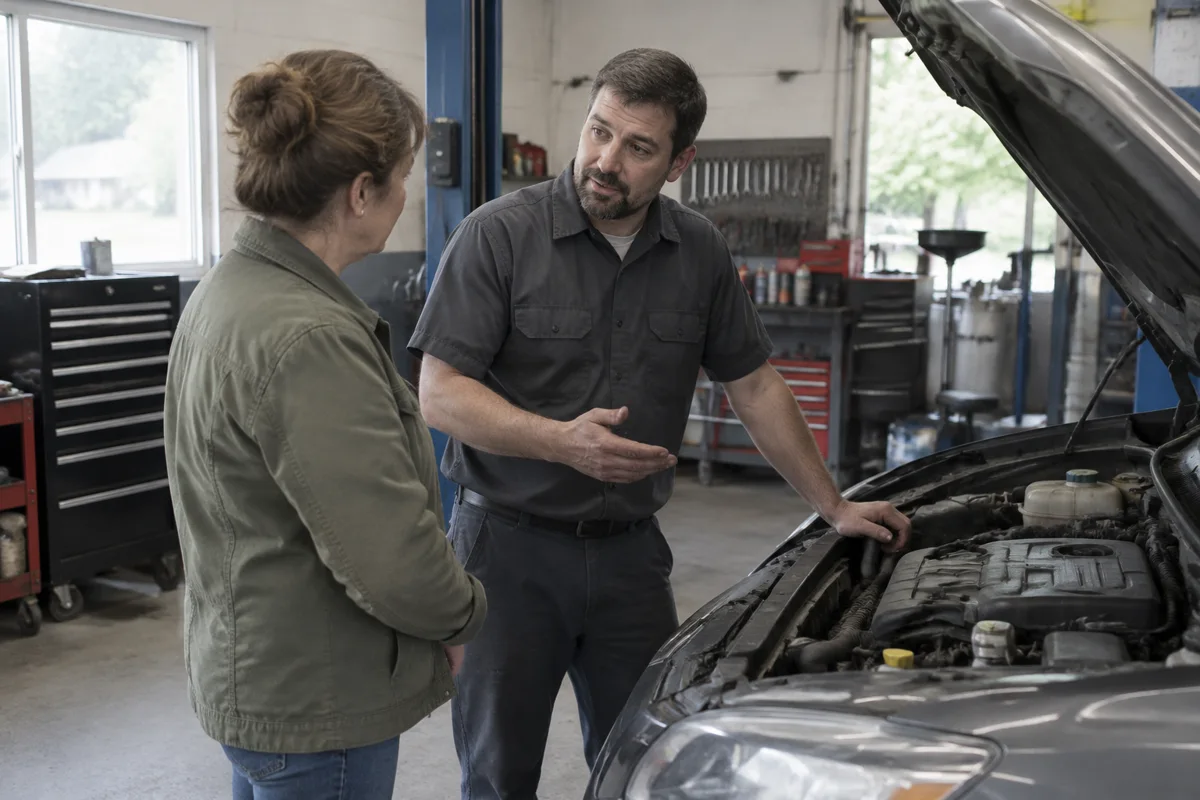
For many drivers, the difficult part of choosing a repair shop is not understanding the equipment. It is wondering whether they will be kept informed and asked before additional work is performed. Explain your actual estimate and authorization process in clear language. Do not make a promise the service team handles differently in practice.
Use real photos of your premises and team, with permission. Show a normal working shop rather than a polished image that has nothing to do with your location. If you have current certifications, a written warranty, or inspection tools worth explaining, present the details accurately. Avoid turning credentials into vague claims of superiority.
Publish genuine customer feedback when you have the right to use it. Specific comments about explanations, communication, or an appointment experience are more useful than invented praise. Do not promise that every repair will be cheap, fast, or simple. Trust comes from clear expectations and how you respond when a job is more complicated than expected.
4. Keep local search information aligned
Check your Google Business Profile as if you were a first-time customer. Are the hours correct? Does the website link work? Do the categories describe the shop? Can someone recognize the building from the photos? Local search maintenance is often less glamorous than a new campaign, but these details affect the first impression a driver gets.
Keep your business identity and location consistent across the website and important listings. If your shop moves or changes hours, make updating those places part of the move. Do not create listings for addresses where you do not operate or add unrelated services to attract a wider set of searches.
Google describes local ranking in terms of relevance, distance, and prominence. A complete listing and useful website can support your presence, but nobody can guarantee that you appear above every nearby shop for every search. Evaluate local visibility together with the quality of inquiries, not as a contest over one screenshot taken from one location.
5. Use paid search with a narrow purpose
Advertising can help you reach people already searching for a service, but begin with a defined goal. Choose a service you genuinely want to book, an area customers reasonably travel from, and a landing page that answers the related questions. Sending every ad to the homepage makes it harder to keep the message relevant.
Review actual search terms and exclude irrelevant intent where the advertising platform allows it. A shop offering repairs may not want to pay for searches about employment, free manuals, or parts-only purchases. Be deliberate about operating hours and the appointment process as well. Demand generated when nobody can respond needs a reliable follow-up plan.
Set spending based on your business, not a generic industry number. Track inquiry quality, booked appointments, and completed work where you can do so accurately. A low cost per click is not automatically a good result. If the campaign attracts work you cannot perform, the problem is targeting and messaging, not simply a need for more spending.
6. Ask for reviews as part of customer follow-up
Make feedback requests a routine step after a genuine customer interaction. A short message with a direct review link can be enough. Ask consistently rather than only when someone praises the advisor at checkout. Do not offer rewards for reviews or ask staff and friends to impersonate customers.
Google's policies prohibit incentives and selectively soliciting positive reviews. Avoid a process that sends happy customers to Google and diverts unhappy customers elsewhere. Private feedback has value, but it should not be used to filter who gets invited to leave a public review. Your reputation should reflect actual customer experiences.
When replying, stay professional and avoid publishing vehicle, payment, or repair details that belong in a private conversation. If a customer raises a problem, acknowledge it and offer an appropriate way to discuss it. A thoughtful response can help future readers understand your approach, even when you cannot settle every issue publicly.
7. Give existing customers a reason to stay connected
New-customer advertising gets attention, but useful communication with existing customers also deserves a plan. With appropriate permission and compliance with messaging requirements, reminders can help people remember a scheduled visit or maintenance discussion. Use your records responsibly and provide a clear way to stop messages where required.
Keep reminders relevant to what you actually know about the vehicle and prior service. Do not send a repair recommendation solely because a calendar says it is time, without considering the manufacturer's guidance and the customer's situation. The purpose is to support a responsible conversation, not pressure someone into an unnecessary appointment.
Social posts can reinforce that same helpful approach. Explain a common warning-light misconception, show how inspections are communicated, or introduce a real team member who agrees to appear. You do not need daily trend videos. A smaller set of useful, accurate posts is more sustainable than an elaborate content schedule the shop cannot maintain.
8. Keep a scorecard that the service team can use
Record where inquiries came from, what service was requested, and whether an appointment was booked. Keep the categories simple enough that an advisor can use them consistently. 'Google' may need a little clarification, because a customer could mean an ad, Maps, or an ordinary search result. It is fine to record an unknown source rather than guess.
Review the difference between leads and completed work. Some requests will be outside your specialty, some will not fit the schedule, and others will need follow-up. Look at the pattern before blaming the website or increasing the budget. More inquiries can expose a response problem instead of fixing it.
Choose one improvement at a time. Repair a broken form, clarify a confusing service page, update your hours, or narrow an ad campaign. Give the change a fair review based on your actual business cycle. A marketing plan earns its place when it helps you make better decisions about the work coming through the door, not when it produces the longest report.
- List priority services and capacity limits.
- Check the website on a phone.
- Explain estimates and authorization honestly.
- Verify Google hours, location, and links.
- Connect each campaign to the right service page.
- Request reviews without rewards or filtering.
- Review qualified inquiries, bookings, and completed work.